
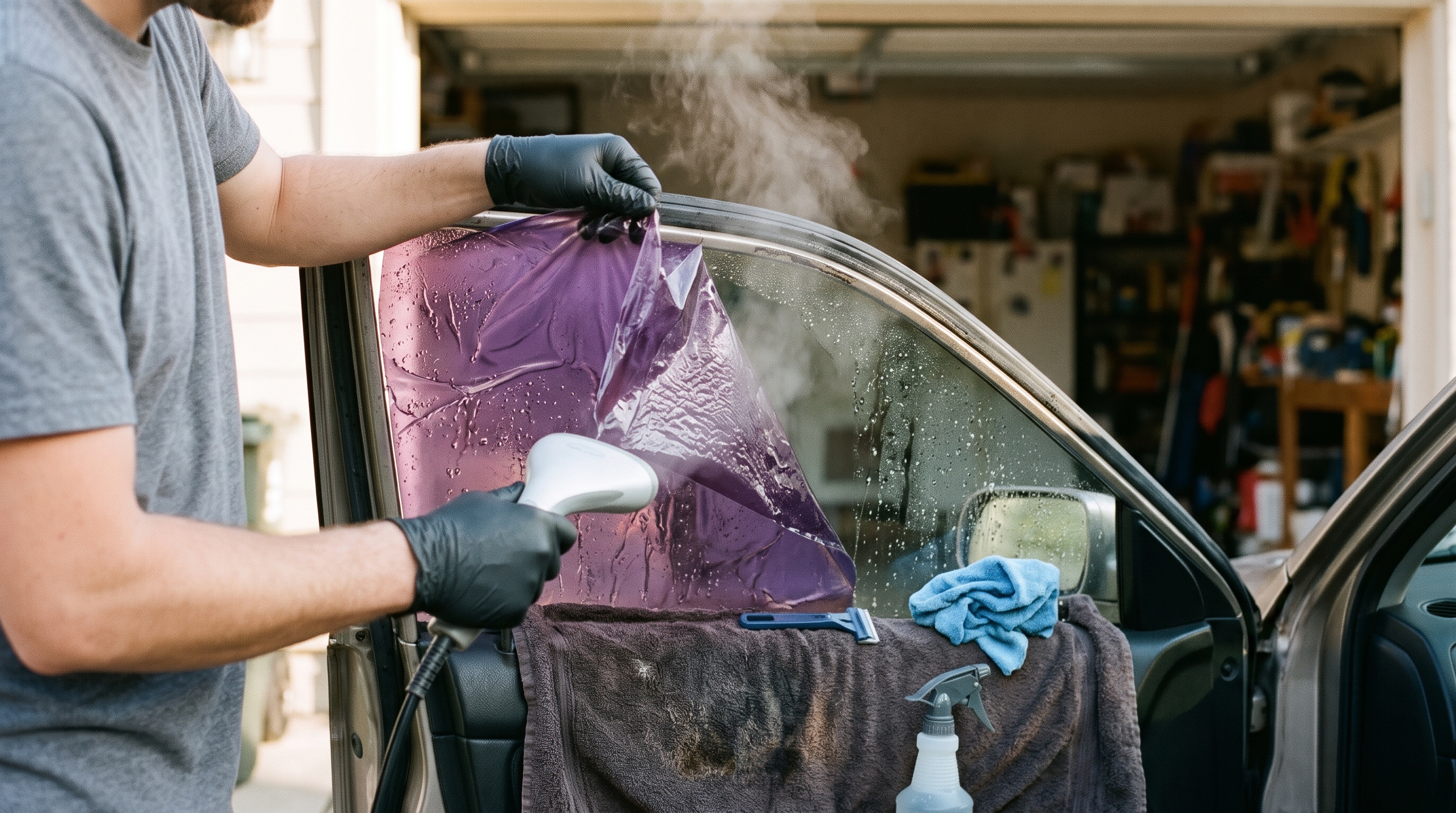
How to remove old window tint: the short answer
Soften the film with heat or steam, peel it off slowly in one piece, then dissolve the leftover glue and scrape it away. On side windows you can use a razor blade. On a rear windshield with defroster lines, never use metal blades.
What you need:
- A clothes steamer, heat gun, or hair dryer
- A spray bottle with soapy water (a few drops of baby shampoo or dish soap)
- Plastic razor blades, plus a metal razor scraper for side windows only
- Adhesive remover or 90%+ isopropyl alcohol
- Microfiber towels and gloves
The steps:
- Heat a top corner of the film until it softens.
- Lift the corner with a fingernail or plastic blade.
- Peel slowly while keeping the heat right at the seam.
- Soak the leftover glue and let it sit for a few minutes.
- Scrape and clean the glass, then check for sticky spots.
Pick your method
Old film comes off differently depending on its age and condition. Dyed film that has turned purple often separates into layers, leaving the adhesive behind on the glass. Here's how the common methods compare:
| Method | Best For | Speed | Risk |
|---|---|---|---|
| Clothes steamer | Any window, especially the rear windshield | Fast | Low |
| Heat gun | Side windows | Fast | Can crack glass if held still too long |
| Hair dryer | Small jobs, newer film | Slow | Low |
| Black trash bag + ammonia in the sun | Old, baked-on film | 30–60 minutes of waiting | Strong fumes; needs ventilation |
| Soapy water and a razor | Film that's already peeling | Slow | Scratches if the blade is dry or dirty |
Many installers prefer a steamer, because it softens the film and glue at the same time without the hot spots of a heat gun. If you don't own one, you can rent one.
Step by step: side windows
- Lower the window about 5 to 6 inches so you can reach the top edge.
- Heat a top corner. Hold a heat gun about 6 inches away and keep it moving. A steamer can go closer.
- Lift the corner and start pulling the film down toward the bottom of the glass.
- Peel slowly and keep heating the seam where the film meets the glass. Ripping it off dry leaves a thick layer of glue behind.
- Raise the window and repeat for the bottom edge that was hidden in the door.
If the film tears into small pieces, it has broken down. Switch to the trash bag method: spray the film with soapy water or diluted ammonia, press a cut-to-size black trash bag over the outside of the glass, and park in the sun for 30 to 60 minutes. The trapped heat loosens the film so it peels more easily.
Rear windshield: protect the defroster lines
The thin lines on your rear glass are electrical heating elements printed on the surface. A metal razor will cut them, and once they're cut that section of the defroster stops working. Repair kits with conductive paint exist, but fixing broken lines is fiddly.
For the rear windshield:
- Use steam rather than a heat gun, and peel the film slowly.
- Use only plastic blades to lift edges.
- Remove leftover glue with a solvent and a soft cloth. Some installers use #0000 steel wool with soapy water and very light pressure, but others avoid it completely. If you try it, test a corner first.
- Turn on the defroster when you finish and check that the whole glass clears.
If the film is fused to the lines or comes off in tiny flakes, stop and take it to a shop. A rear window is usually the hardest part of any removal.
Removing the leftover glue
Most of the work is often the adhesive, not the film. Here's how common products answer the questions people ask most:
| Product | Works on Tint Glue? | Notes |
|---|---|---|
| Soapy water | Somewhat | Safe first step; keeps a razor blade from scratching |
| Adhesive remover (Goo Gone and similar) | Yes | Made for this; follow the label and ventilate |
| Isopropyl alcohol (90%+) | Yes | Evaporates clean, so it's a good final wipe |
| Ammonia window cleaner | Yes | Good with the trash bag method; never mix with bleach |
| WD-40 | Yes, for residue | Leaves an oily film that must be fully cleaned off before new tint |
| Acetone | Yes | Keep it off paint, plastic trim, and door panels |
| Vinegar | Weak | Usually too mild for tint adhesive |
Spray the glue, let it soak for a few minutes, then scrape. On side windows, a fresh metal razor held at a low angle on wet glass is fine. Finish with alcohol or glass cleaner, then run your hand over the dry glass to find any sticky patches you missed.
Protect the door panel and speaker grilles with towels. Solvents and water running into the door can damage trim and electrical parts.
DIY vs. professional removal
DIY makes sense for side windows with film that peels in large sheets. It gets much harder with old purple film, rear windshields, and cars you can't afford to damage.
Time is the hidden cost. A shop with a commercial steamer can often strip a car in about an hour. On r/WindowTint, one owner said his first full car took 12 hours because the purple film split into layers.
Professional removal typically costs $150 to $300 for a full car and $100 to $175 for the rear window alone. Our window tint cost guide has full prices. If you plan to retint, ask the shop to quote removal and new film together, since installers often prefer to remove old film themselves to get the glass clean.
Before you retint
- Clean the glass thoroughly. Any leftover glue or oil from WD-40 will show up as bubbles under new film.
- Check the defroster on the rear glass.
- Choose a legal shade. Check your state's limits on our 50-State Chart, especially if the old tint was darker than allowed.
- Plan for curing time. New film needs a few days before you roll the windows down. See how long window tint takes to cure.
The same steps work on home windows, but residential film is usually larger and may need a ladder and a commercial steamer.
Frequently asked questions
What dissolves old window tint?
Heat and moisture loosen the film itself. Steam is the most effective, followed by a heat gun or the sun with a trash bag over soaked film. For the glue left behind, use an adhesive remover or 90% isopropyl alcohol.
Does WD-40 remove tint?
It helps with the glue, not the film. Spray it on the residue, wait a few minutes, and scrape. Clean the glass thoroughly afterward with alcohol, because the oily film can keep new tint from sticking.
What will dissolve window tint glue?
Adhesive removers, isopropyl alcohol, acetone, and ammonia-based cleaners all work. Soak the glue first and give it time before you scrape.
Will vinegar remove window tint?
Not well. Vinegar is usually too mild for tint adhesive. Use it as a final glass cleaner instead.
Sources
- Removing tint: DIY or pro?, r/WindowTint
- How to Remove Old Window Tint, Window Film Depot
- How to Remove Old Window Tint Without Damaging Glass, Turbo Tint North OKC
- How to Remove Window Tint Glue, Everclear Tinting
- How to Remove Tint From a Rear Window, EngineerFix
- How Much Should You Charge for Window Tint Removal?, Tint Academy
Need a Verified Window Tint Pro in Your City?
Avoid non-compliant film and costly citations. Search our nationwide directory of licensed, highly-rated automotive window tint specialists with verified customer reviews and warranty-backed installations.
Find Tint Shops Near You →